How Often Should a Cat Sitter Visit?
How to Keep Your Cat Safe, Comfortable, and Happy During Your Trip
If you ask ten cat owners how independent cats are, you’ll probably get ten different answers. Some people picture cats as low-maintenance pets who simply need food, water, and a clean litter box. Others know the truth: cats thrive on routine, companionship, observation, and proper daily care — especially when their owners are away.
So how often should a cat sitter visit?
The short answer is:
at least once per day for most cats.
But the best answer depends on your cat’s personality, age, health, routine, and emotional needs. Here’s what professional cat sitters want every cat owner to understand before leaving town.
Why Daily Visits Matter
Cats are masters at hiding illness, stress, and injury. A cat can become sick very quickly, and problems can
escalate within hours
if no one is checking on them.
Daily visits allow a professional cat sitter to:
- Refill fresh food and water
- Scoop litter boxes
- Monitor appetite and bathroom habits
- Watch for signs of illness or stress
- Provide affection and interaction
- Administer medications if needed
- Ensure your home remains secure
Even cats that seem aloof usually benefit from human interaction and routine while their owners are away.
Once Per Day: The Standard Recommendation
For healthy adult cats, one visit every 24 hours is generally considered the minimum professional standard.
During a daily visit, a sitter can:
- Feed your cat on schedule
- Refresh water bowls
- Scoop litter
- Check for vomiting, diarrhea, or signs of illness
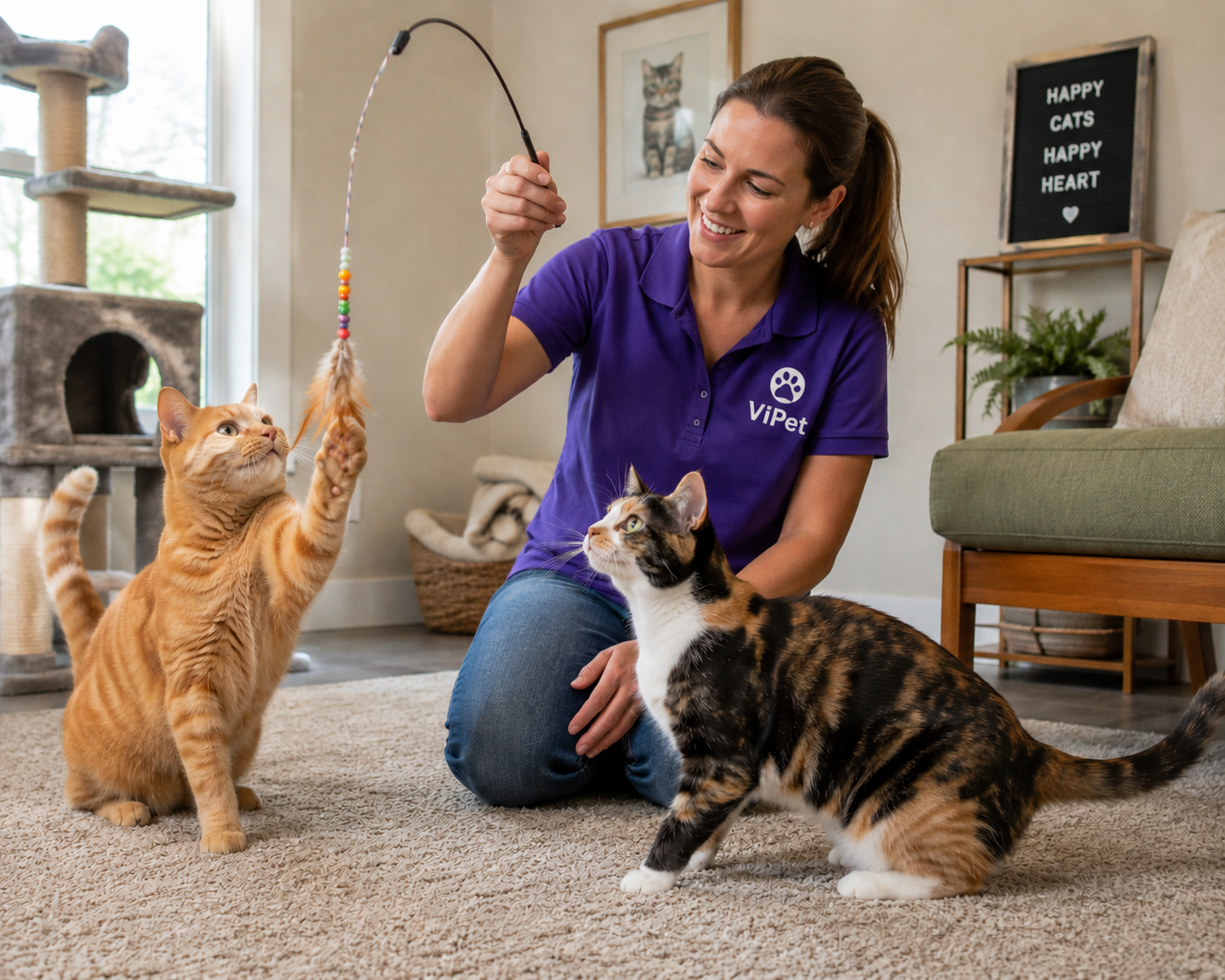
- Spend time playing, brushing, or cuddling
- Provide emotional reassurance
Many cats adjust very well to one quality visit per day for shorter trips.
However, not all cats are the same.
Some Cats Need More Frequent Visits
Certain cats do better with twice-daily visits or longer care sessions.
Kittens
Kittens are curious, energetic, and sometimes reckless. They require:
- More frequent meals
- Extra supervision
- Socialization and play
- Monitoring for safety issues
Young kittens should never be left alone for extended periods. Boredom is an issue for any cat, but young kittens tend to explore and knock over items, tear up plants, or shut themselves into closets and rooms, getting trapped for hours. More frequent check is a more prudent choice when you have active kittens that will benefit from time spent in vigorous play with a human companion.
Senior Cats
Older cats can experience rapid health changes. Increased visits help monitor:
- Appetite
- Mobility
- Hydration
- Medication needs
- Litter box habits
Senior cats may even need assistance to stand, or must be transported to the litter box and food/water bowls. Be sure you special-needs cats is getting the complete attention required for its individual needs.
Cats With Medical Conditions
Diabetic cats, cats with kidney disease, or pets requiring medication often need multiple daily visits. It is especially important to be able to monitor urine output from a cat in late stage renal disease or renal failure. In multi-cat homes, it is best to separate a cat with urinary or kidney issues so that their litterbox can be better monitored by a pet sitter.
Social or Anxious Cats
Some cats become lonely, stressed, or destructive when left alone too long. Additional visits can reduce anxiety and help maintain routine. Encourage your pet sitter to engage your cat in play and leave plenty of toys, treats and cat nip as desired so that cats can be stimulated during the time the sitter is present.
Is Every Other Day Okay?
Most professional pet sitters strongly discourage visits every other day, and many will not offer anything but daily visits, for many of the health reasons mentioned above.
While some owners believe cats “prefer to be alone,” skipping daily care creates risks:
- Illness may go unnoticed
- Water bowls can empty or become contaminated
Many cats do enjoy "playing" with water and will quickly knock over or empty water bowls! - Litter boxes become unsanitary
A cat unhappy with the cleanliness of its litter box will often start going outside the box, even on furniture, beds and clothing. - Canned or pouch foods may spoil
- Emergencies can happen without anyone knowing
Even highly independent cats deserve daily wellness checks and human care.
What About Automatic Feeders and Cameras?
Technology can be helpful, but it should never fully replace human care.
Automatic feeders cannot:
- Notice illness
- Clean litter boxes
- Respond to emergencies
- Detect behavioral changes
- Provide companionship
Pet cameras are useful supplements, but they cannot physically help your cat if something goes wrong.
Nothing replaces an experienced human being checking on your pet in person. A pet sitter with extensive knowledge of the typical behavior changes that occur during illness is your best bet.
Cats Need Emotional Care Too
One of the biggest misconceptions about cats is that they don’t form strong emotional bonds. Nothing could be further from the truth!
In reality, many cats:
- Wait by the door or look out the windows for their owners
- Sleep beside their people every night
- Become stressed by disrupted routines
- Experience separation anxiety
Professional cat sitting is about more than feeding and scooping. It’s about maintaining comfort, consistency, and trust while you’re away.
The Best Cat Sitting Schedule
Here are general guidelines many professional pet sitters recommend:
General Cat Sitting Visit Recommendations:
Healthy adult cat
At least 1 visit daily
Social or anxious cat
2 visits daily
Kitten
2–3 visits daily
Senior cat
1–2 visits daily
Cats with medical needs
*Based on veterinarian instructions and care requirements
Every cat is unique, and a professional sitter can help you determine the best care plan for your pet.
Final Thoughts
Cats may be independent, but they are not self-sufficient. Pet Sitters, like the team at VIPet Sitter Service, provide far more than food and litter maintenance. They provide observation, companionship, routine, safety, and peace of mind — for both you and your cat.
When planning a trip, the goal shouldn’t simply be keeping your cat alive until you return. The goal should be making sure your cat feels safe, comfortable, cared for, and emotionally secure while you’re away.
Because cats deserve excellent care, too.